SUPERHEROINES
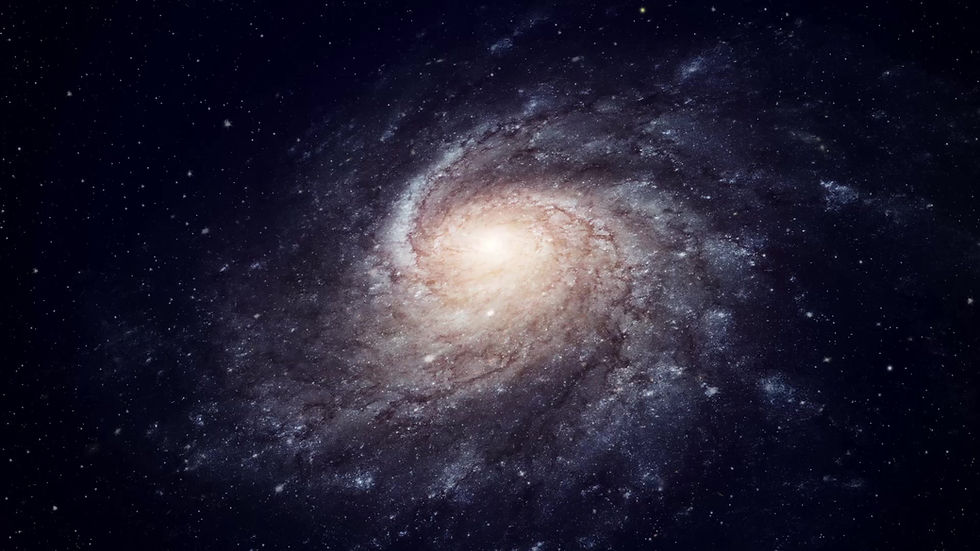
Exploring the space with a superhero that can overcome all space challenges
challenges
Isolation and confinement:
Astronauts will be more isolated and confined than we can imagine. Sleep loss, circadian desynchronization, and work overload compound this issue and may lead to performance decrements, adverse health outcomes, and compromised mission objectives
Participants subjected to these space analog conditions can encounter typical symptoms ranging from neurocognitive changes, fatigue, misaligned circadian rhythm, sleep disorders, altered stress hormone levels, and immune modulatory changes.
As Selye stated in 1950: “Anything that causes stress endangers life, unless adequate adaptive responses meet it.” The individuals’ genetically programmed and/or acquired adaptation mechanisms allow human beings to cope better with stressful situations. Travels to space should have strategies that give some individuals an advantage in overcoming such a situation.
Vacuum :
Space is a vacuum devoid of air, meaning that, unlike on earth, there's no atmosphere and no pressure exerted by air molecules.
Given that 60% of the human body is made up of water, this is a severe problem,” In the absence of pressure, liquid water in our bodies would boil — changing immediately from a liquid to a gas. "In essence, all of your body tissues that contain water will start to expand,"
The hard vacuum of space will cause outgassing, which is the release of volatiles from materials. The outgassed molecules then deposit on line-of-sight surfaces and are more likely to deposit on cold surfaces. This molecular contamination can affect the optical properties of vehicle and payload surfaces and spacecraft performance, particularly for sensitive optics.
No living organism can survive in a vacuum except for Tardigrades (water bears). They are super-tiny animals best known for surviving in some of the harshest conditions: extreme heat, extreme cold, the bottom of the ocean, near volcanoes, highly radioactive environments, and even the vacuum of space.
Ultraviolet Radiation:
Earth’s atmosphere filters out most of the sun’s damaging light, but ISS materials bear the brunt of solar photon damage. While AO may bleach materials, UV generally darkens them, particularly in the presence of contamination. UV radiation damages polymers by cross-linking (hardening) or chain scission (weakening). UV under a high vacuum can also create oxygen vacancies in oxides, leading to significant color changes.
UV-B radiation harms living organisms, damaging DNA, proteins, lipids, and membranes. Plants, which use sunlight for photosynthesis and cannot avoid exposure to enhanced levels of UV-B radiation, are at risk.
In space, there is no atmosphere to protect astronauts from UV radiation, X—rays, gamma rays, or even more dangerous cosmic rays. Astronauts must provide their protection through space suits and space stations.
Radiation:
Space is a universe full of radiation comprised of atoms in which electrons have been stripped away as the atom accelerated in interstellar space to speeds approaching the speed of light – eventually, only the atom’s nucleus remains.
Space radiation comprises three kinds of radiation: particles trapped in the Earth’s magnetic field; particles shot into space during solar flares (solar particle events); and galactic cosmic rays, high-energy protons, and heavy ions from outside our solar system. All these kinds of space radiation represent ionizing radiation.
DNA readily absorbs radiation in some cases; it causes the shape of the DNA to be changed. While cells can repair this damage using specialized enzymes, sometimes the damage is permanent.
Radiation in space cause Cancer, disease bleeding, and inflammation due to lowered platelet counts. Suppressed immune system function and infections are possible due to lowered white blood cell counts. Reduced fertility or permanent sterility could also result. In addition to causing damage at the tissue, organ, and whole organism level, radiation can destroy molecules like DNA.
Atomic Oxygen AO:
It is produced when short-wavelength UV radiation reacts with molecular oxygen in the upper atmosphere. It is the most significant component of the space environment at ISS altitude regarding material degradation. AO oxidizes many metals, especially silver, copper, and osmium. AO reacts strongly with any material containing carbon, nitrogen, sulfur, and hydrogen bonds, meaning that many polymers react and erode. Polymers containing fluorine, such as Teflon®, respond synergistically, meaning that the reactivity to AO increases with longer exposure to UV radiation. Even materials with AO protective coatings can degrade because AO is undercutting erosion at defensive coating defect sites.
Low Earth orbital (LEO) atomic oxygen cannot only erode the external surfaces of polymers on spacecraft but can cause degradation of surfaces internal to components on the spacecraft.
Particulate or Ionizing Radiation:
The three primary sources of charged particle radiation naturally occurring in space are galactic cosmic rays, solar proton events, and trapped radiation belts. For most materials on the ISS, the effects of AO and UV can overshadow any effects of particulate radiation. Depending on the polymer, particulate radiation can result in cross-linking or chain scission, like damage by UV, resulting in polymer embrittlement. A more significant effect is seen in avionics, namely single-event upsets, bit errors, and latches. This can be mitigated by selecting “rad-hard’’ “avionics” or placing shielding around the electronics.
Radiation effects may also be alleviated using error-correction circuitry and triple-module redundancy, where two good process results “outvote” a corrupted one.
Ionization from radiation changes atoms and molecules. This changes molecules at the cellular level and causes damage.
“Human behavior flows from three main sources: desire, emotion, and knowledge”
Plato


OUR SUPERHERO (Mr. MAKRAM)
The "Space Biology Superheroes" is created by merging traits from different living organisms to educate people about the difficulties of space travel and to excite their interest in both space travel and the biological research that will support upcoming missions. After researching several living organisms, we discovered the greatest one that includes all the characteristics necessary for a creature to survive in space:
-
Tardigrade is from extremophiles which is microorganisms live in conditions of extreme temperature, acidity, alkalinity, or chemical concentration and survive under pressure six times pf our oceans deepest trenches. Also, they can thank a unique protein for their resiliency known as DSUP (Damage suppressor) which produce specific gel protects its internal components from dehydration.
-
This project focuses mainly on facing the challenges that prevent scientists from exploring space, like radiation, the AO effect, and temperature changes. It solves the challenge by making a product that is composed of lightweight magnetic shields that can face AO and temperature changes as well as being coated by isolation material which is silica aerogel that has micropores with good thermal insulation properties which work as the gel in the tardigrades that will prevent it from be affected by the vacuum and the lose of pressure in the space.
-
The superhero will use available materials (lightweight magnetic shields, and silica aerogel) in the shape of a Pleiadean light ship spinning around its axis and provided with macro cameras and eavesdropping devices to allow us to explore the other planets and other living organisms that might be available there.
